The urge to visit the Mahakal temple had been a long standing one and was recently fulfilled. Initially, the plan was only to visit Ujjain. But, on taking inputs from friends and family, Omkareshwar was also added in the 3-day itinerary.
We were starting our journey to Ujjain from Visakhapatnam. There are no direct trains available from Visakhapatnam to Ujjain. One has to take two different trains to reach Ujjain. The change over station can either be Vijayawada or Bhopal. Alternatively, one can opt for flights for a quicker travel. The nearest major airport near Ujjain is Indore and is around 60 km from Ujjain. Based on our feasibility and availability of tickets, we choose the route via Bhopal. We reached Ujjain at around 10 in the morning and checked into the hotel.
Day 1:
It was a Lunar eclipse on the day we arrived at Ujjain. By the time we freshened up, the temples in the city were closing. So, we made a change of plan. We had our lunch and rested for some time in the hotel. In the evening, we took a walk around the city and decided to visit the Mahakal corridor.
Mahakal corridor:
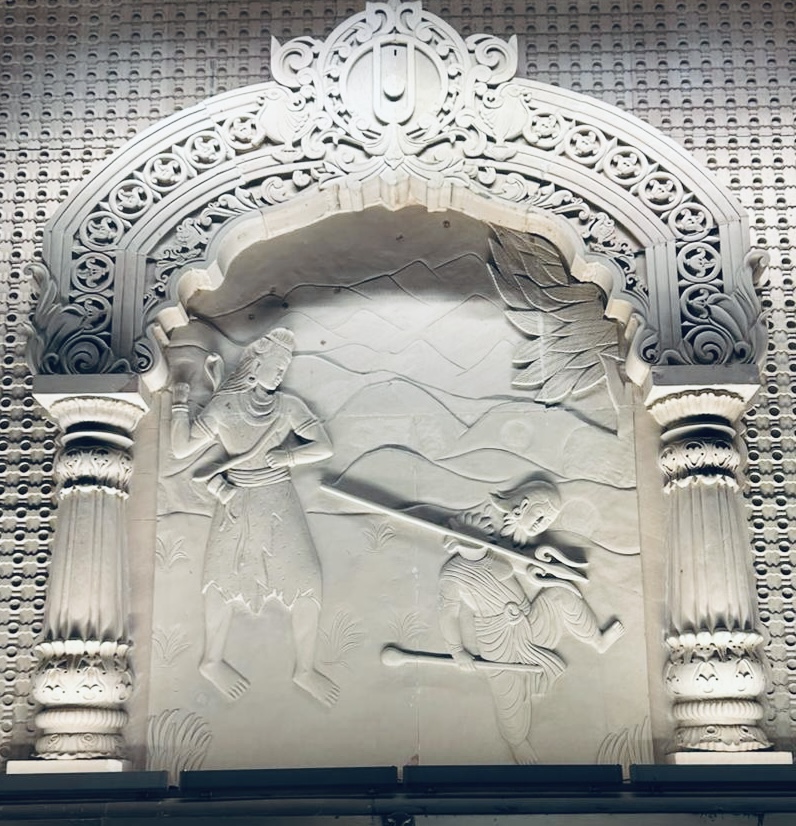
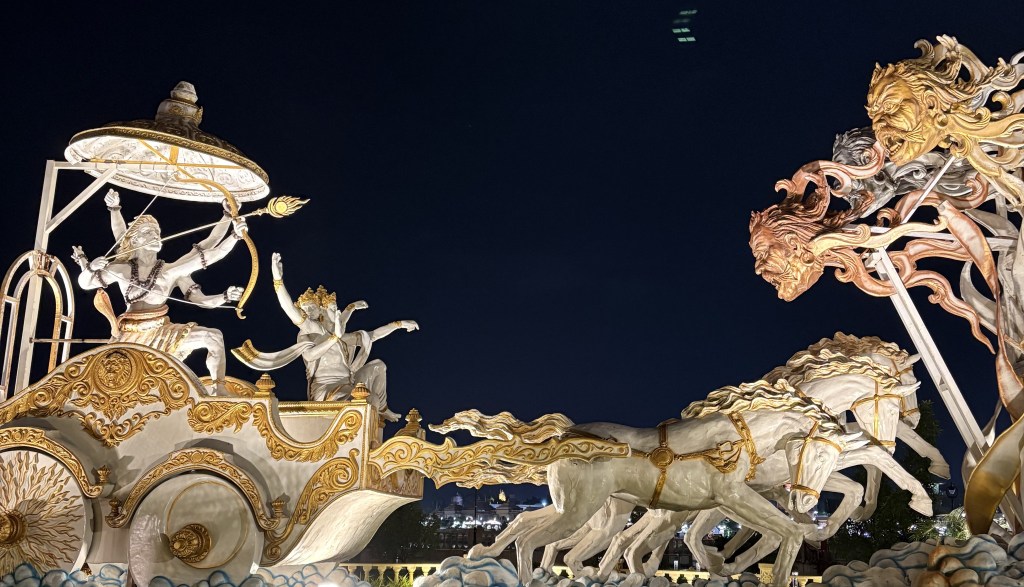
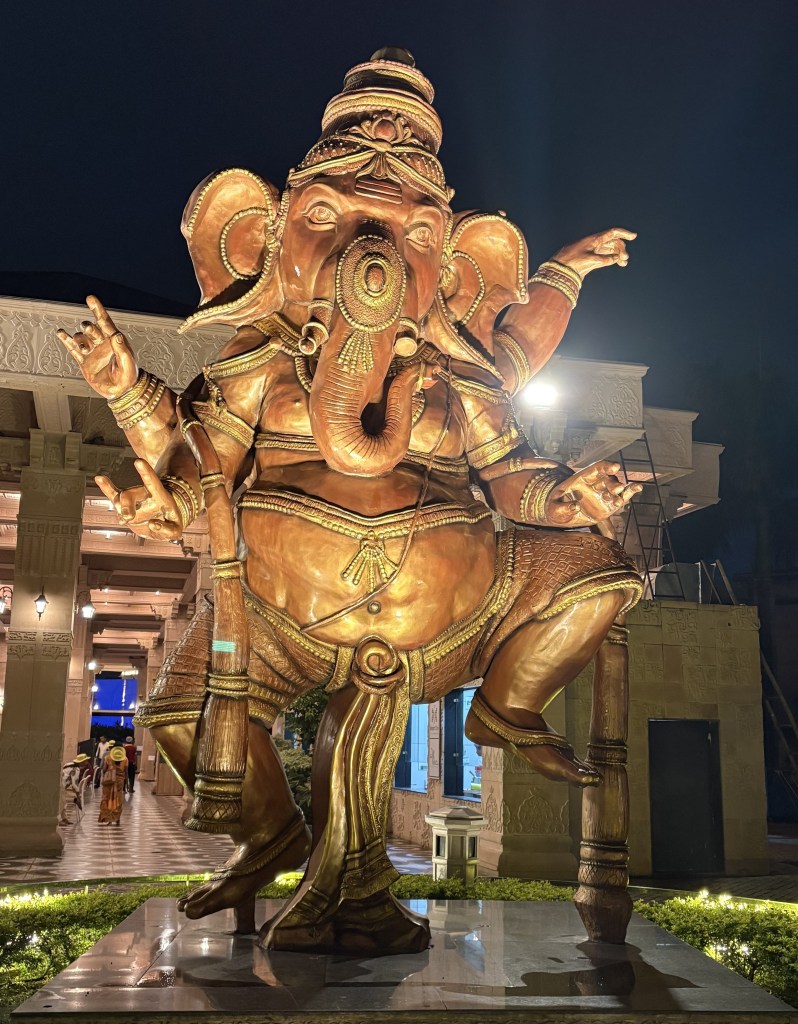
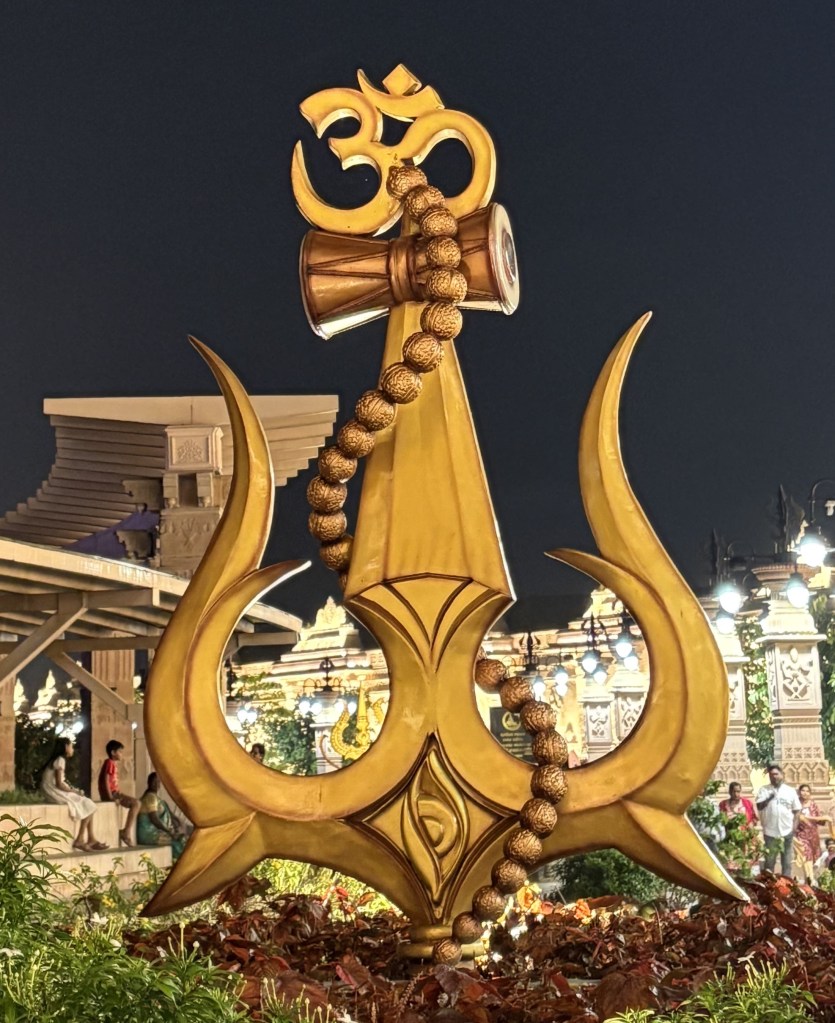
There are two entry gates through which one can enter the Mahakal corridor, namely Nandi Dwar and Pinaki Dwar. The corridor features murals and statues depicting the various stories of Lord Shiva. It offers a spiritual experience to the visitors by transferring them into a different realm. The beauty of the corridor can be best appreciated in the evening with lights. The corridor connects the Mahakaleswar temple with the Rudra Sagar lake. It has eateries and convenience points. The entry to the corridor is free. Connected to the corridor, there is Bharat Mata temple dedicated to Mother India. A light show is held here in the evening. It showcases the history of Ujjain. It is a must watch. Mahakal corridor aka Mahakal Lok is an experience which shouldn’t be missed in Ujjain.

After visiting the Mahakal complex, we had dinner and returned to our room. This way we ended our first day of the trip.
Day 2:
We began the second day early as we needed to cover nearly everything on the same day. We had our darshan slot in the morning. We quickly got ready. Then, we proceeded to the temple for our darshan.
Mahakal temple:
Mahakal temple is one of the 12 Jyotirlinga temples in the country. This is the only temple where the idol is known to be facing the south (Dakshinmukhi). This orientation is considered unique because south is linked to death. The idol here is Swayambhu (self-manifested). The temple is famous for its unique ritual known as Bhasma Aarti. In this ritual, the idol is worshiped with Bhasma (ash) every morning. This is a sacred and an exceptional practice, symbolizing the cycle of life, death and rebirth. The aarti is performed early in the morning and is the first ritual. It serves to awaken the Lord Shiva. The ash is brought from the banks of river Shipra. For participating in this ritual, one can book tickets online from the official temple website. One can also try getting the tickets offline, at the temple before day. This is a strenuous process and the chance of getting tickets is very low. So, online mode is the recommended way to book tickets for Bhasma Aarti.
We did not get the tickets for Bhasma Aarti online. The slots were filled up and not available for two months. Hence, we opted for the Seeghra (Quick) darshan.
The main temple is built in five levels where the bottom most level is located underground. The Garbhagriha of Mahakal is located on the second level from the bottom. The third level is where the idol of Naga Chandreshwar is situated. The entry to this level is restricted and is open only on the day of Nag Panchami. The temple is built in the Nagara style, having the influence of Maratha and Chalukya style of architecture.
Lockers/counters are available for storing the mobile phones and chappals. We dropped our mobiles at one of the counters and proceeded for the darshan. It took us around 20 min to finish our darshan. In the temple premises, photographers are available for capturing the pictures with the temple back drop.
After clicking the photos and collecting our belongings, we had a quick breakfast at one of the local eateries. A point to note here is the existence of Tika (Tilak) scam at some places. This is a street-level fraud targeting the devotees. They approach the devotees and apply tilak without consent and later on demand huge dakshina (offering). So, it is advised to stay alert and politely decline the advances if the tika is not needed.
After our breakfast, we hired an auto rickshaw. He charged us around 500 rupees to cover all the surrounding important temples. Our first stop was at the Sandipani ashram.
Sandipani ashram:
Sandipani ashram is one of the most revered sites in Ujjain. The ashram was built in the remembrance of Sandipani Maharishi. It is considered to be the place where Lord Krishna, Balarama, and Sudama received their education. As per the legend, Lord Krishna mastered 64 different skills here in just 64 days. There is a walkaway around the ashram where all the 64 skills are depicted through art and pictures. It has a stepped tank known as Gomati Kund, the water of which is considered holy. The ashram draws a large number of devotees on Guru Purnima Day, when the vidyarambh sanskar of children is performed.
After visiting the ashram, we went to the Mangalnath temple.
Mangalnath temple:
According to Matsya Purana, it is regarded as the birthplace of Mangal (Planet Mars). Lord Shiva is the main deity of the temple. The temple is famous because a lot of people come here for performing mangal dosha nivaran puja. The temple is a two storied one. The ground floor is used for performing various pujas while the first floor is where the garbhagriha is located. The red color of the temple signifies the fiery nature of planet mars.
Kal Bhairav temple:
Lord Kal Bhairav is considered as the guardian deity of Ujjain. Liquor is offered here to the deity. There are shops outside the temple which sell liquor along with flowers and coconuts. It is believed that the deity swallows the liquor offered to him. A part of the offering is given to the devotees as prasad. The offering of liquor to the deity is one of the ancient tantric rituals. Only the priests can offer the liquor to the deity, and the devotees must hand over the bottles to priests.
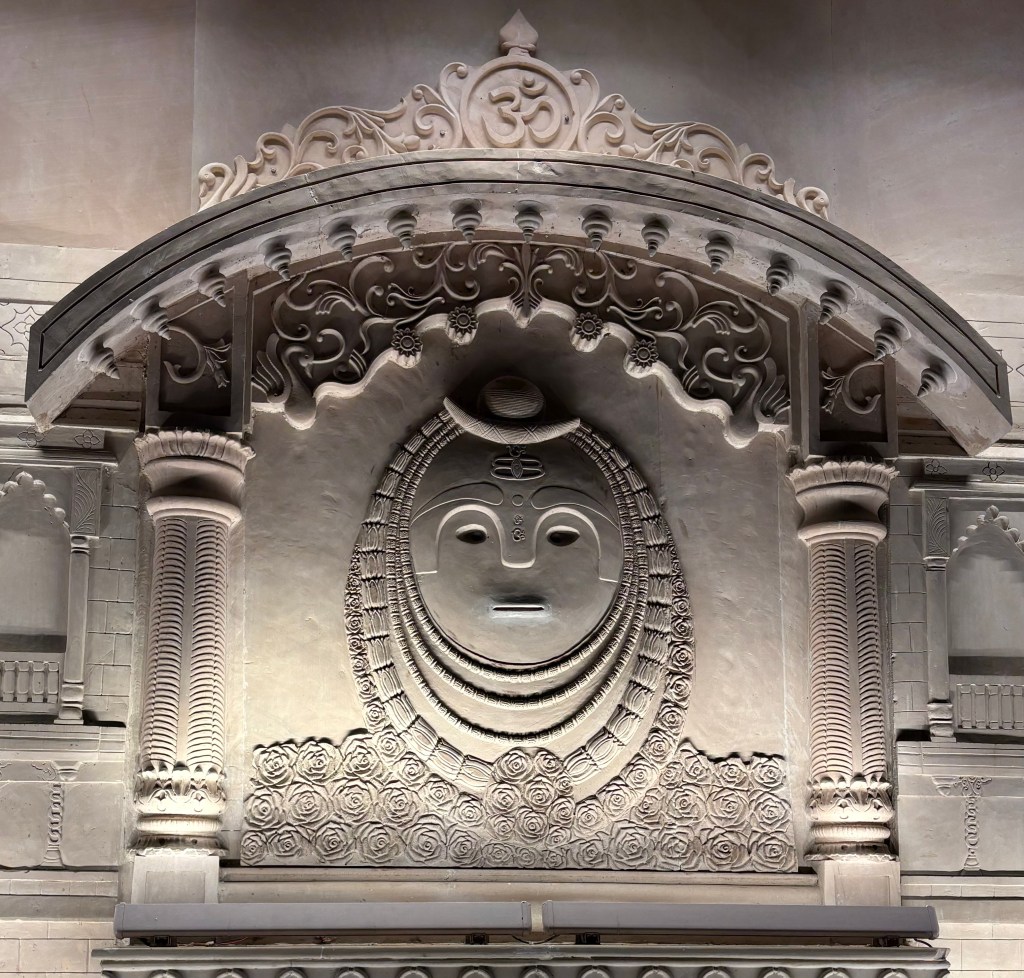
The chief deity looks fierce and symbolizes the destruction of ego and fear. It is believed that the pilgrimage to Mahakaleshwar is incomplete without paying homage at Kal Bhairav temple.
Gadkalika temple:
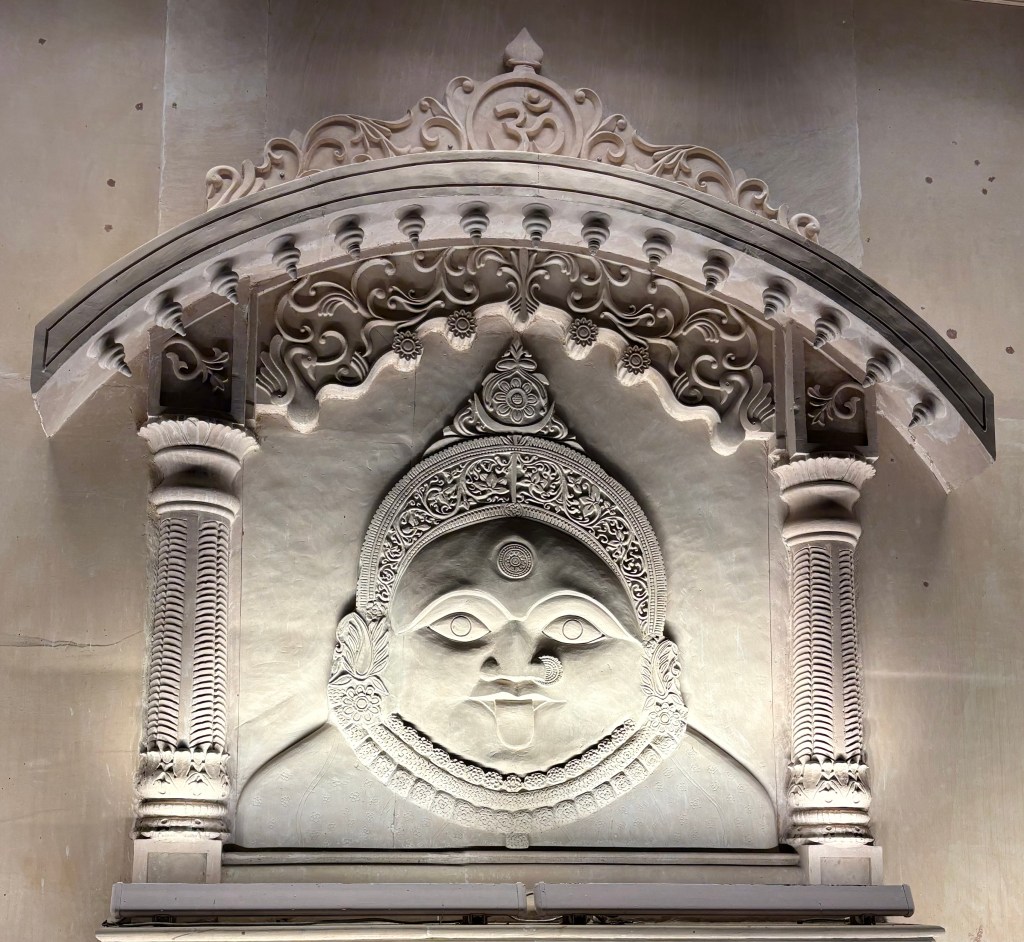
The temple is dedicated to Goddess Kali. Due to the temple’s proximity to Gadh village, it is named as Gadkalika. It is one of the 18 Astadasha Maha Shakti Peethas i.e. the sacred sites where parts of Goddess Sati’s body fell to earth after the self-immolation. It is believed that the upper lip of Sati fell at this place. Legend states that this was the place where Kalidas worshiped Goddess Kali and gained profound wisdom. Although Kali is believed to be the fierce form of Parvathi, the idol here looks very calm. The darshan of Goddess Gadkalika evokes a sense of reverence in the hearts of the devotees.
Chintamani Ganesha Temple:
Chintamani Ganesha is a must-visit temple in Ujjain. It is considered as the biggest temple of Lord Ganesha in the city. The idol here is swayambhu and is known as Chintamani as he is believed to take away one’s chintas (i.e. worries). The temple also has a link with the Ramayana. It is believed that Maa Sita made three different clay idols of Ganesha during Rama’s exile. The three forms are- Chintamani Ganesh, Ichchhamani Ganesh and Siddhivinayak. Miraculously, all these three different idols turned into a single stone by the blessings of Lord Ganesha. There is also a kund within the temple premises, locally known as Sita Kund. It is believed that the water of this Kund carries the blessings of Ganesha.

Harsiddhi temple:
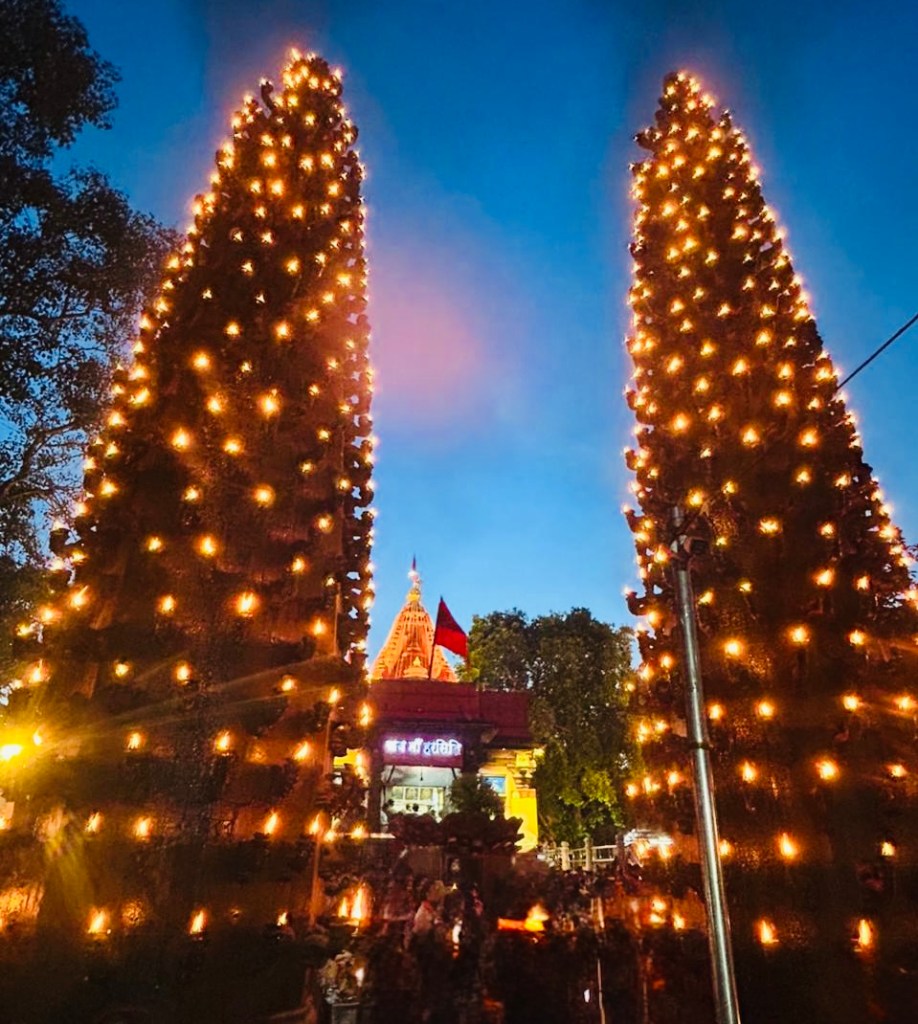
The temple is one of the 51 Shakti Peethas, as described in the Devi Purana. It is believed that the elbow of Goddess Sati fell here. According to Skanda Purana, Shiva granted the title of Harsiddhi to Goddess Parvati. She assumed a form combining the forces of Kali, Lakshmi, and Saraswati. This was done to vanquish demons, Chanda and Prachanda. There are two pine-shaped pillars in front of the temple, adorned with lamps. Every evening, the temple performs aarti here, where all these lamps are hand lit by climbing onto the pillars. This is a spectacle which must not be missed. There is also a shrine of Goddess Mahamaya, positioned within the temple complex. Due to its location in the underground, it is referred to as the Underground Chamber. An Akhand jyoti (eternal lamp) has been burning here continuously since centuries. The entry to the general public is restricted here. The devotees can view the Goddess only through small openings in the shrine. Only the priest can enter the shrine.
After visiting all the temples, we ended our day and rested for the night.
Day 3:
Next day we planned on visiting Omkareshwar. Cabs are easily available from Ujjain to Omkareshwar, and one can opt them for a hassle-free travel. Omkareshwar is also one among the 12 Jyotirlingas. People usually visit Omkareshwar while visiting Ujjain due to its proximate location.
Omkareshwar Jyotirlinga:
Omkareshwar is situated at a distance of 140 km from Ujjain. Omkareshwar temple is situated on the Mandhata Island, formed by the Narmada river. The island is shaped like the Hindu symbol ‘OM’. Omkareshwar Jyotirlinga is a swayambhu linga and is considered as a living linga. Devotees believe that the linga breathes according to the river’s pulse. The entire place, surrounded by the river’s roar, resonates with the sound of Om.
There are two temples here: one is Omkareshwar and the other is Mamleshwar. Omkareshwar temple is situated on the island. The Mamleshwar temple is located on the southern bank of the river on the mainland. There is a ferry ride in the Narmada river, and one can take this route to visit the Mamleshwar temple. The ferry ride shows the temple in its whole and offers a beautiful view.
There is a choice of VIP darshan at Omkareshwar temple, and the tickets can be booked online. There are not many options for accommodation near the temple. People usually don’t opt for a stay there, as both the important temples can be covered in half a day. We too did the same. After having our lunch, we went to the railway station to catch our train back home.
The Ujjain trip had touched our souls and faded our illusions. It made a place in our hearts and left us lighter. It is true that life takes a turn for the best after one’s visit to Mahakal. Har Har Mahadev!
Points to note:
- Hotel at Ujjain: Hotel Satyug
- Dishes to try: Poha with Jalebi, Dahi Puri, Bread vada and Indrani
- Photography is allowed in most of the temples but clicking pictures of the idols is not allowed.
- Dress code for Bhasma Aarti: Traditional dhoti or kurta-pyjama for men, Saree or salwar kameez with dupatta for women.
- Cost of Seeghra Darshan at Mahakal temple: Rupees 250 per person. Carry ID proofs.
- Cost of Seeghra Darshan at Omkareshwar temple: Rupees 300 per person.
 Travel Diary