We had always wanted to explore one of India’s most popular tourist circuits, covering Delhi, Agra, and Amritsar. Although we had visited a few places in Delhi during our previous trip to Himachal, there was still a lot left to explore. Finally, we decided to make this trip happen. We planned to spend two days in Amritsar, two days in Delhi, and one day in Agra, starting our journey from Hyderabad. This first post covers our experiences and itinerary in Amritsar.
We had an early morning flight from Hyderabad at 6:30 with a two-and-a-half-hour layover in Delhi, before reaching Amritsar. We reached Delhi around 9:30 and Amritsar around 12:30 in the afternoon. The airport is not far from the city, and we reached the hotel within an hour. After checking into the hotel, we quickly freshened up, had lunch, and booked a ride to reach our first stop, the Attari-Wagah border.
Attari-Wagah border:
It is one of the must-visit places for anyone travelling to Amritsar. The Beating Retreat ceremony usually takes place at the time of sunset, and the timings vary in summer and winter accordingly. We visited in the first week of September, and the ceremony started at 5:30 PM. The distance from Amritsar to the border is around 25 km, and to get a good seat, one needs to reach early. So, we quickly proceeded with our ride, and it took us almost an hour to reach there. We had to walk a lot before reaching the entry gate, and the heat was scorching. The entry is free for everyone, and carrying an ID is a must. The frisking is very strict, and no electronics other than a phone are allowed inside. There is a counter nearby the entry gate, to store electronic items, but the price they charge for it is very unreasonable.
After frisking, we entered the premises and still had to walk some distance to reach the main point. The pathway leading to the main seating galleries is lined with shops selling snacks and beverages. Our driver suggested that we grab the seats beside the pathway where the ceremony usually takes place. However, the guard at the entry informed us that only large bookings are allowed there, and all the others have to take the stairs and go to the top galleries for seating. We did the same, and the view from there was also good. Before the retreat ceremony, women and children were called up and given a chance to hold the flag and run a short distance with it. Also, taking photos near the main gate between the Indo-Pak border was allowed. A few patriotic songs were played, and women were given a chance to dance to the tunes. A group of female BSF personnel then performed a march, carrying their rifles, which was quite remarkable to watch.
After some time, the start of the Retreat ceremony was announced, and everyone watched the 20-minute parade with a sense of awe and pride. The energy at the place cannot be described in words and must be felt in person. Watching our soldiers march and interact with their Pakistani counterparts and witnessing the ceremony conclude with the lowering of flags filled us with a sense of patriotism.
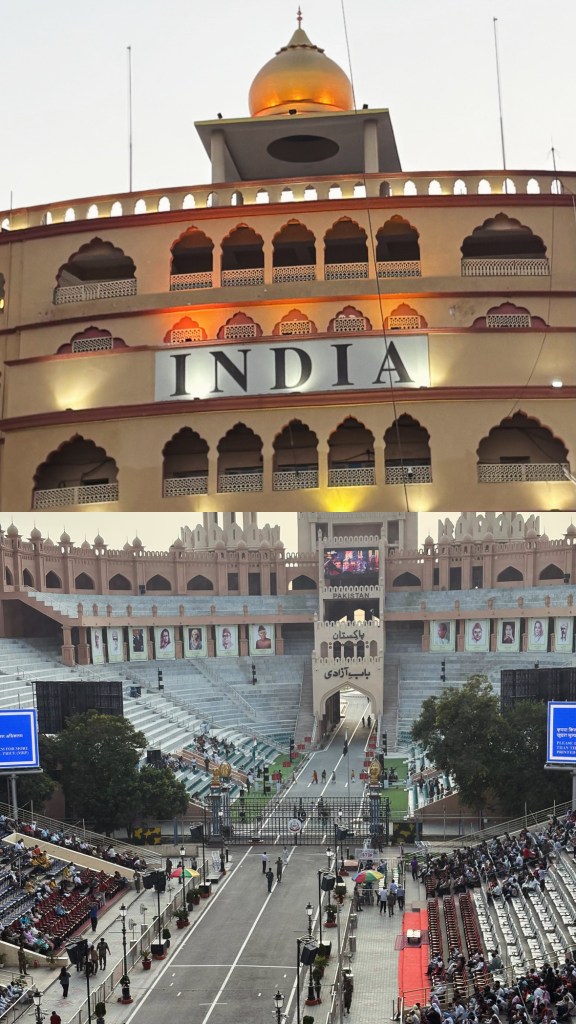
After the retreating ceremony, we walked back to the road and began our ride back to the hotel. Due to the scorching heat at the border and the travel, we were completely exhausted, so we decided to take some rest. After an hour, we got ready and went to the Golden Temple to admire its beauty in the night’s glow. Although the temple complex is open 24 hrs, the main shrine closes at 10:30 PM and opens again at 2:30 in the morning. Unfortunately, by the time we reached the temple, it was past 10:30, and we had to return without having a darshan. But we spent some time sitting near the sarovar and going around the temple, and it was very calming. We couldn’t have asked for a better ending to our exhausting first day.
Day 2
We began our day with a visit to the Partition Museum.
Partition Museum:
The museum was established in 2017 and is located in the town hall of Amritsar. It acts as a repository for the various documents and other literature belonging to the people who were affected by the partition of British India into India and Pakistan in 1947. An audio-guided tour is also available for a detailed understanding of the various events at that time. The photos depicting the loss of life, destruction, and the unspeakable atrocities faced by our countrymen were quite hard to look at. The entire museum is divided into 14 galleries and shows the various events ranging from the pre-independence colonial struggle to the post-partition riots and the success stories of various individuals who overcame the loss of their loved ones during partition and later on achieved great heights in life.
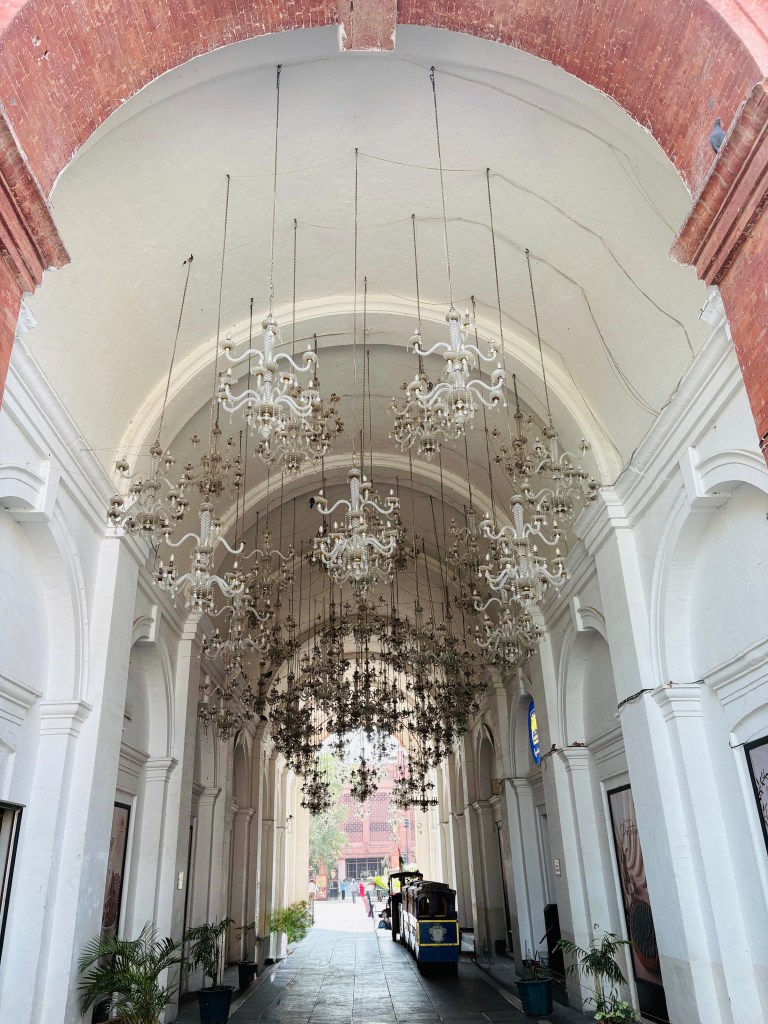
Since Jallianwala Bagh is located within walking distance from the museum, we decided to go there next.
Jallianwala Bagh:
Almost every Indian has heard about the infamous Jallianwala Bagh massacre, which took place during our fight for independence from British rule in 1919. It was one of the most atrocious acts committed by the British against Indians and revealed the true colonial face. Walking through the narrow pathways and remembering the brave souls who lost their lives that day was emotional. One can see the walls with the bullet markings still intact. The well where many people tried to jump in fear, to escape from the gunshots, is also present in the complex. We walked through the Bagh with heavy hearts and with renewed appreciation for the freedom that we achieved after so many struggles and sacrifices.
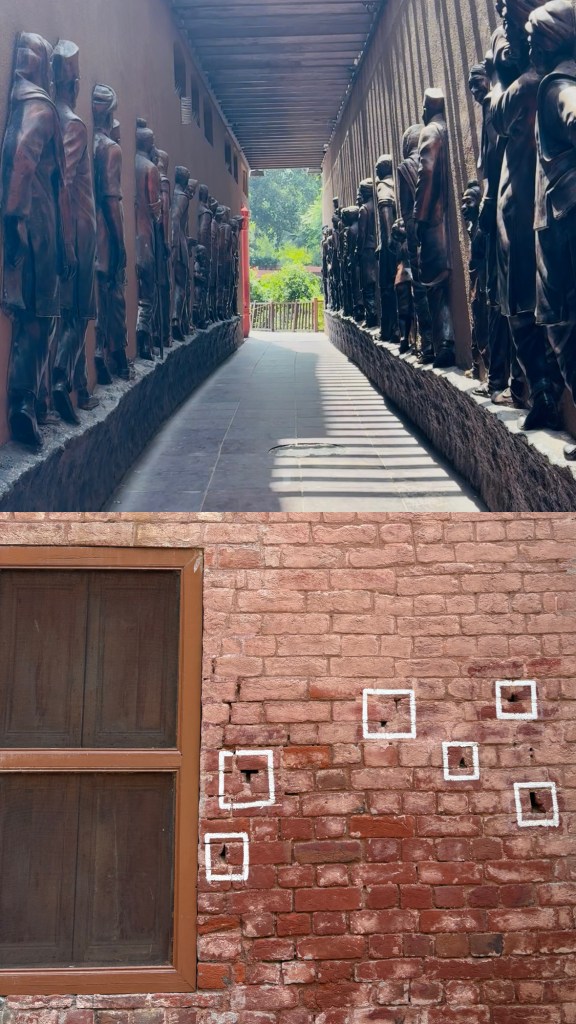
Next, we decided to go to the Golden Temple for darshan since we missed it the previous night.
Golden Temple:
This is the first place that comes to mind whenever Amritsar is mentioned. Also known as Sri Harimandir Sahib, it is one of the most significant places of worship in the Sikh religion. This Sikh Gurudwara is situated in the middle of a sarovar (sacred pool) known as Amrit Sarovar. There are four entrances to the temple, and anyone, irrespective of their religion or race, can visit the temple.
Watching the Golden Temple in sunlight was a completely different experience from watching it at night, and both sights were beautiful. We quickly got into the line and completed our darshan within an hour. One of the noteworthy things I observed at the temple was that everyone behaved with utmost discipline and a sense of calm. There was no pushing in the queue, and aged people and those with kids were wholeheartedly allowed to go to the front by jumping the queue. There was no urgency in having a darshan, and everyone was chanting the hymns while waiting patiently in the line.
During our visit, we noticed two separate queues for darshan; the left one was relatively slow-moving and appeared to be preferred by devotees who wished to spend more time inside the shrine or visit its upper floor. The movement in this line was controlled by sevadars who held a thick bamboo pole and sent the pilgrims in batches. The right queue moved faster and seemed to be preferred by visitors who wanted a quicker darshan.
We preferred the left line and got to see the entire main shrine up close. As soon as one enters the shrine, the holy Guru Granth Sahib can be seen, placed on a raised platform. There are stairs to reach the first floor, and a Granthi (priest) is usually seated there. The steps and the top floor were filled with devotees, seated in deep meditation.
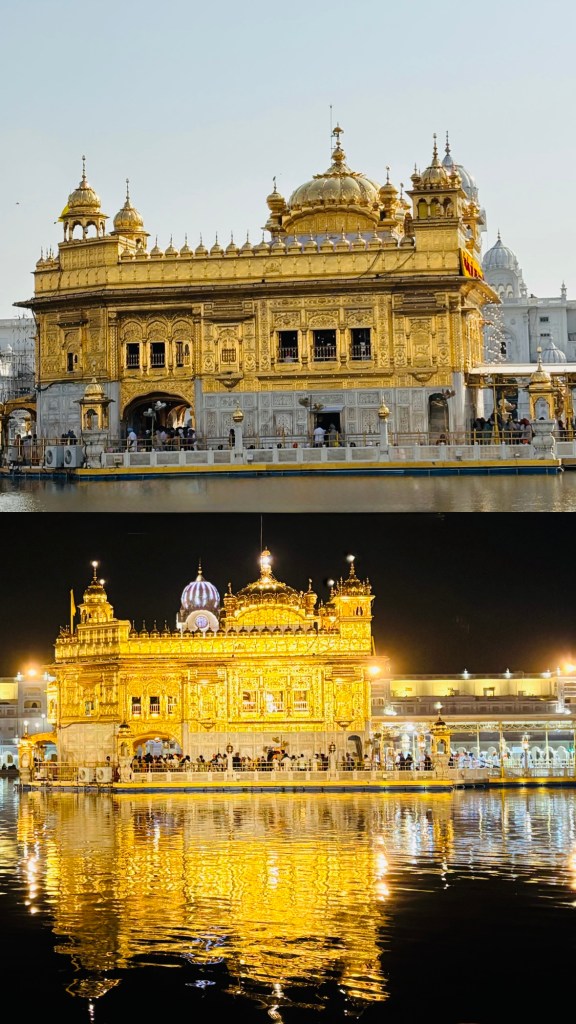
After our darshan, we took our kada prasad, walked around the temple, sat in silence for some time, and took a few pictures respectfully as a memory. Then we decided to have the langar because how can anyone miss the Golden Temple’s free community dining experience? After having our food at the langar, we walked through the market and bought some souvenirs.
Our stay in Amritsar gave us a heartfelt glimpse of vibrant Punjabi culture and the genuine warmth of its people. Although there was still much more to explore, we were happy with what we managed to cover during our short stay. With wonderful memories of Amritsar, we boarded our train to Delhi.
The next post will cover our itinerary of Delhi and Agra.
Points to note:
- Head coverings are mandatory inside the Golden Temple for both men and women. Head scarves are available near the entrance, or you can purchase them from the nearby shops.
- Photography is not allowed inside the main shrine. However, photography is allowed near the sarovar and the outer complex.
- Photos near the sarovar can only be taken in a respectful way, and sevadars usually patrol the area to enforce this.
- Ticket to Partition Museum for Indians: Rs 10 and for Foreigners: Rs 250. It is closed on Mondays
- Must carry items while visiting Attari border: a water bottle, sunglasses, comfortable walking shoes and an umbrella
- Food recommendations: Lassi at Gian Di Lassi, Punjabi thalis at Kesar da Dhaba and Bharawan da Dhaba, Amritsari kulcha at Pehalwan kulcha, street snacks at Brijwasi Chat Bhandar
- Famous for phulkari dupattas, Punjabi juttis, and aam papad, along with some masalas.
- En route to the Attari-Wagah border, there is Valmiki Ashram, and if time permits, one can add this to the itinerary.

